When to Take Supplements: Morning vs Evening, With Food or Without
A per-nutrient timing guide from NIH, NHS and MedlinePlus: which supplements need food, which to keep apart, and what to ask your pharmacist about medicines.
6 min read
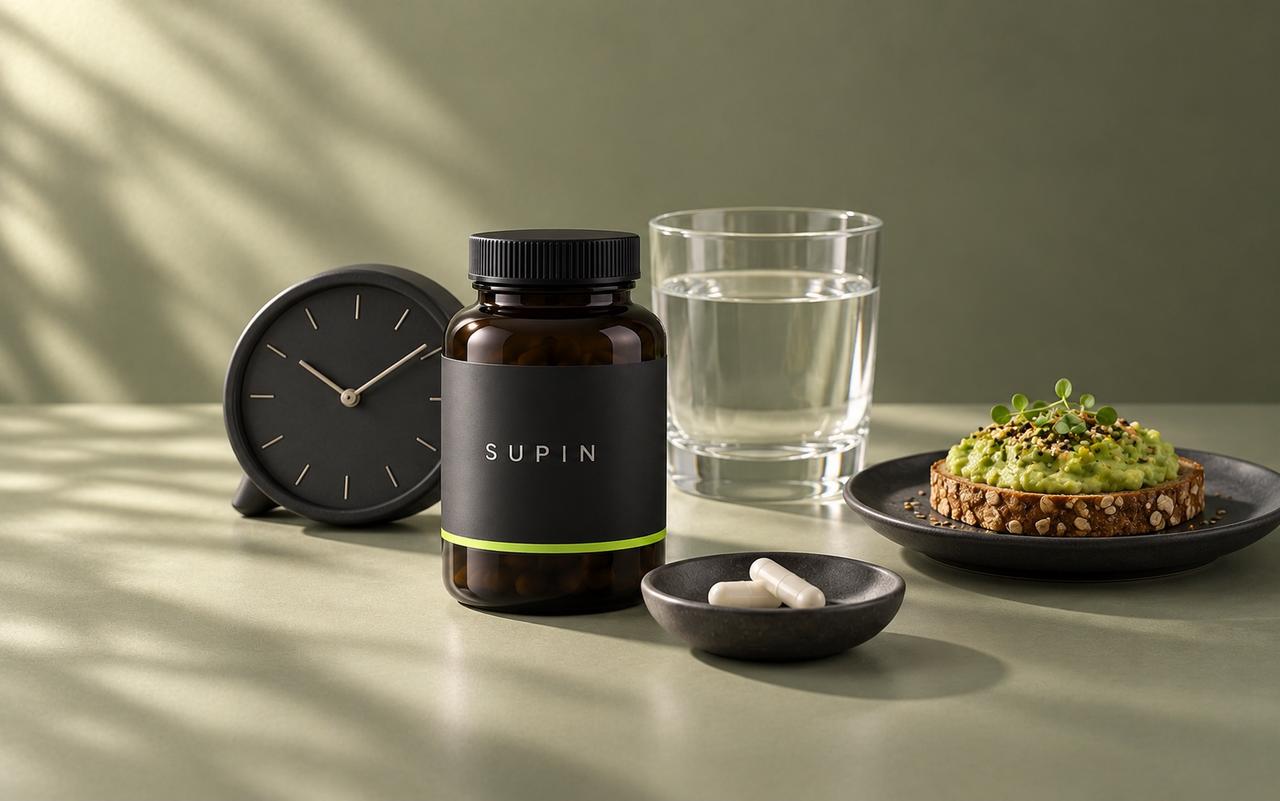
For most supplements, the best time to take them is the time you'll remember, but a few rules from health agencies help. Take fat-soluble vitamins (A, D, E, K) with a meal that contains fat. Keep iron and calcium apart. Space minerals away from thyroid medicine and some antibiotics. Supin can schedule each product by part of the day.
Below is a per-nutrient table based on NIH, NHS and MedlinePlus guidance, then the most common questions: morning or night, with food or without, and which supplements to keep apart.
Is there a best time of day to take supplements?
For most nutrients, no official source names a single best hour. Two things matter more: food, because some nutrients are absorbed better with a meal and others are disturbed by it, and spacing, because some nutrients and medicines interfere with each other.
Vitamins fall into two groups. The fat-soluble vitamins, A, D, E and K, are absorbed more easily in the presence of dietary fat. The water-soluble vitamins, C and the B vitamins, aren't stored in the body, except B12[1].
When to take each supplement: the table
| Supplement | With food? | Keep apart from |
|---|---|---|
| Vitamin D | With a meal that contains fat: fat in the gut helps absorption, though some is absorbed without it[2]. | Ask about orlistat, statins, steroids and thiazide diuretics, which can interact[2]. |
| Vitamins A, E and K | With a meal that contains fat[1]. | Vitamin K and large amounts of vitamin E can affect blood thinners such as warfarin[3][4]. |
| Iron | NHS advice for iron tablets: best on an empty stomach, or with food if it upsets your stomach[5]. | Calcium, tea, coffee, eggs and dairy; levothyroxine[5][6]. |
| Calcium | Carbonate with food. Citrate with or without. Absorption is generally better with food[7]. | Iron; levothyroxine; some antibiotics[6][7]. |
| Magnesium | No best time is set. High amounts can cause diarrhoea, nausea and cramping[8]. | Oral bisphosphonates and some antibiotics[8]. |
| B vitamins | No set time. Folic acid is absorbed well with or without food[9]. | Long-term metformin or stomach-acid medicines can lower B12 levels[10]. |
| Vitamin C | No set time. The share absorbed falls as the amount rises[11]. | Nothing to separate. Vitamin C helps the body absorb the iron in plant foods[6]. |
| Zinc | No set time. Too much can cause nausea and stomach upset[12]. | Higher-strength iron supplements taken at the same time; quinolone and tetracycline antibiotics[12]. |
| Omega-3 / fish oil | With a meal: in a small study, fish oil was absorbed better with a high-fat meal[13]. | Ask if you take warfarin or other blood thinners[14]. |
| Probiotics | Follow the label. Effects differ by strain[15]. | Ask your pharmacist if you take any medicines. |
| Multivitamin | Most contain fat-soluble vitamins, so a meal is a natural anchor[1]. | Products with vitamin K: talk to your doctor if you take warfarin[3]. |
When should I take vitamin D?
Take vitamin D with a meal that contains some fat. The NIH says fat in the gut helps vitamin D absorption, although some is absorbed even without it[2]. The fact sheet doesn't name a time of day. The meal is what matters.
Vitamin D can interact with orlistat, statins, steroids and thiazide diuretics. If you take one of these, check with your pharmacist[2].
Should I take magnesium in the morning or at night?
The NIH magnesium fact sheet doesn't name a best time of day. Pick a time you'll stick to. What it does flag is spacing from medicines.
Magnesium can reduce the absorption of oral bisphosphonates, such as alendronate, so take them at least 2 hours apart. It also binds to tetracycline and quinolone antibiotics; the NIH says to take those antibiotics at least 2 hours before or 4 to 6 hours after a magnesium-containing supplement[8]. Labels name different forms, such as oxide, citrate or chloride; see how to read a supplement label.
Can I take iron and calcium together?
It's better to take them at different times of the day. Calcium might interfere with iron absorption. The effect hasn't been definitively established, but experts suggest taking separate calcium and iron supplements at different times[6].
The NHS adds that tea, coffee, eggs and dairy can reduce how much iron you absorb. It suggests leaving a 2-hour gap between them and your iron tablet. A doctor or pharmacist may suggest taking iron with orange juice or vitamin C[5], which helps the body absorb iron from plant foods[6].
Should supplements be taken with food or on an empty stomach?
- With food: vitamins A, D, E and K[1], calcium carbonate[7] and fish oil[13].
- Empty stomach if you can: iron, according to NHS advice for iron tablets. If it upsets your stomach, take it with food[5].
- Either: calcium citrate[7] and folic acid[9].
- Always: the directions on the product label come first.
Which supplements should not be taken with medication?
Thyroid medicine is the best-known example. Levothyroxine is usually taken on an empty stomach, 30 minutes to an hour before breakfast. MedlinePlus advises taking calcium carbonate or iron supplements at least 4 hours before or after it[16]. The NIH fact sheets for iron and calcium describe the same label warning[6][7].
Other examples from the NIH fact sheets: calcium, magnesium and zinc with certain antibiotics[7][8][12], and vitamin K with warfarin[3]. If you take any prescription medicine, ask your pharmacist to check your timing. To see how a whole day fits together, read how to build a supplement routine.
How Supin helps
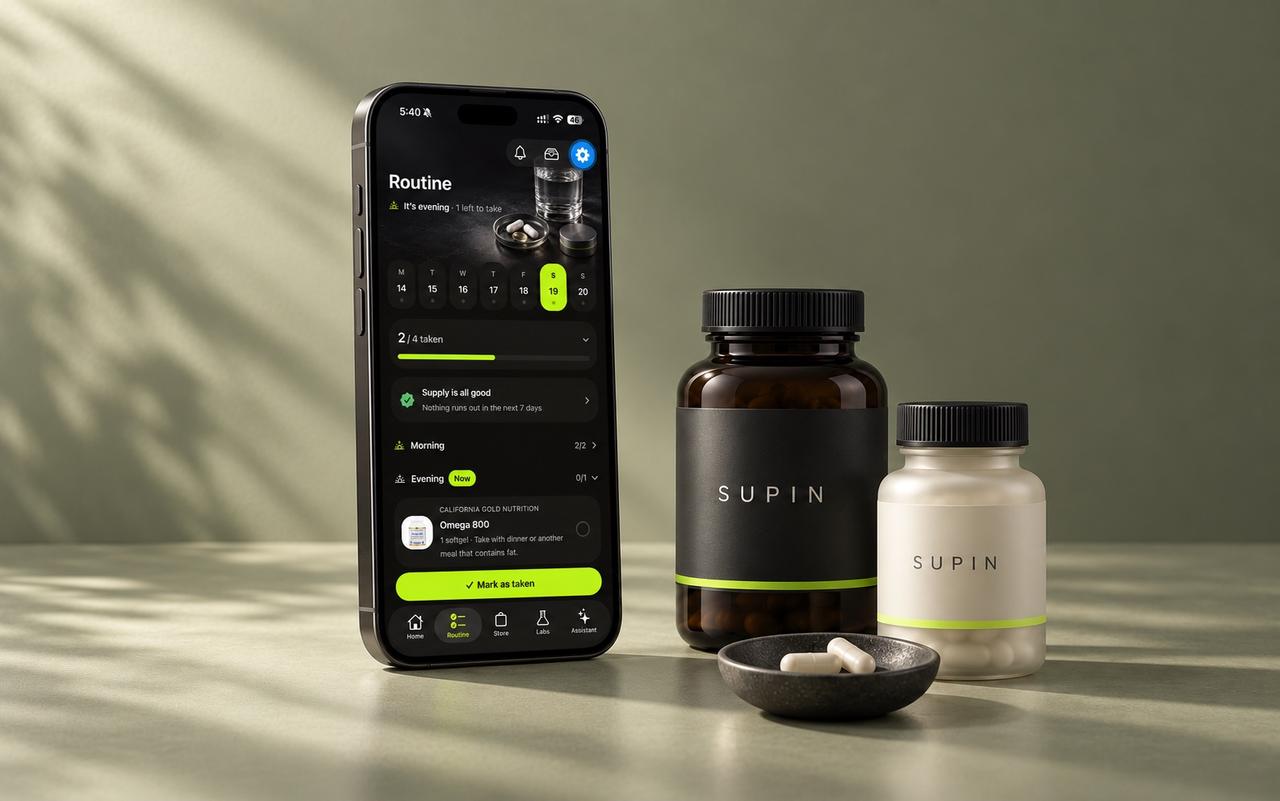
- Every product in your routine has a part of the day: morning, noon, evening or bedtime.
- Reminders for each part of the day, skipped when you've already marked everything taken.
- Tell it you take prescription medication and unsuitable products are left out or flagged for a pharmacist.
- The assistant can answer timing questions about your own routine, once you allow AI features.
Get Supin on the App Store to put each product in the right part of your day.
FAQ
Some combinations are fine and some aren't. Iron and calcium are best taken at different times[6], and higher-strength iron supplements can reduce zinc absorption when taken at the same time[12]. Check each label and ask your pharmacist.
The NIH fact sheets don't list an interaction between them. Take vitamin D with a meal that contains fat[2], and keep magnesium apart from the medicines listed above[8].
For most vitamins, no source sets a time of day. What matters is food (fat-soluble vitamins with a meal[1]) and taking them consistently.
NHS advice for iron tablets suggests a 2-hour gap before having tea, coffee, eggs or dairy[5].
Many multivitamins contain fat-soluble vitamins, which are absorbed more easily with dietary fat[1], so taking one with a meal makes sense. Follow the label.
Sources
- MedlinePlus — Vitamins
- NIH Office of Dietary Supplements — Vitamin D fact sheet
- NIH Office of Dietary Supplements — Multivitamin/mineral supplements fact sheet
- NIH Office of Dietary Supplements — Vitamin E fact sheet
- NHS — How and when to take ferrous sulfate
- NIH Office of Dietary Supplements — Iron fact sheet
- NIH Office of Dietary Supplements — Calcium fact sheet
- NIH Office of Dietary Supplements — Magnesium fact sheet
- NIH Office of Dietary Supplements — Folate fact sheet
- NIH Office of Dietary Supplements — Vitamin B12 fact sheet
- NIH Office of Dietary Supplements — Vitamin C fact sheet
- NIH Office of Dietary Supplements — Zinc fact sheet
- Lawson LD, Hughes BG. Absorption of EPA and DHA from fish oil triacylglycerols or fish oil ethyl esters co-ingested with a high-fat meal. Biochem Biophys Res Commun, 1988
- NIH Office of Dietary Supplements — Omega-3 fatty acids fact sheet
- NIH Office of Dietary Supplements — Probiotics fact sheet
- MedlinePlus — Levothyroxine
Educational information, not medical advice. Check with your doctor or pharmacist before starting or changing supplements, especially if you take medication, are pregnant or have a health condition.