Supplements for Stress: Ashwagandha, L-Theanine and Magnesium Compared
Ashwagandha, L-theanine and magnesium for stress: what the studies found, doses tested, how strong the evidence is and who should avoid each.
6 min read
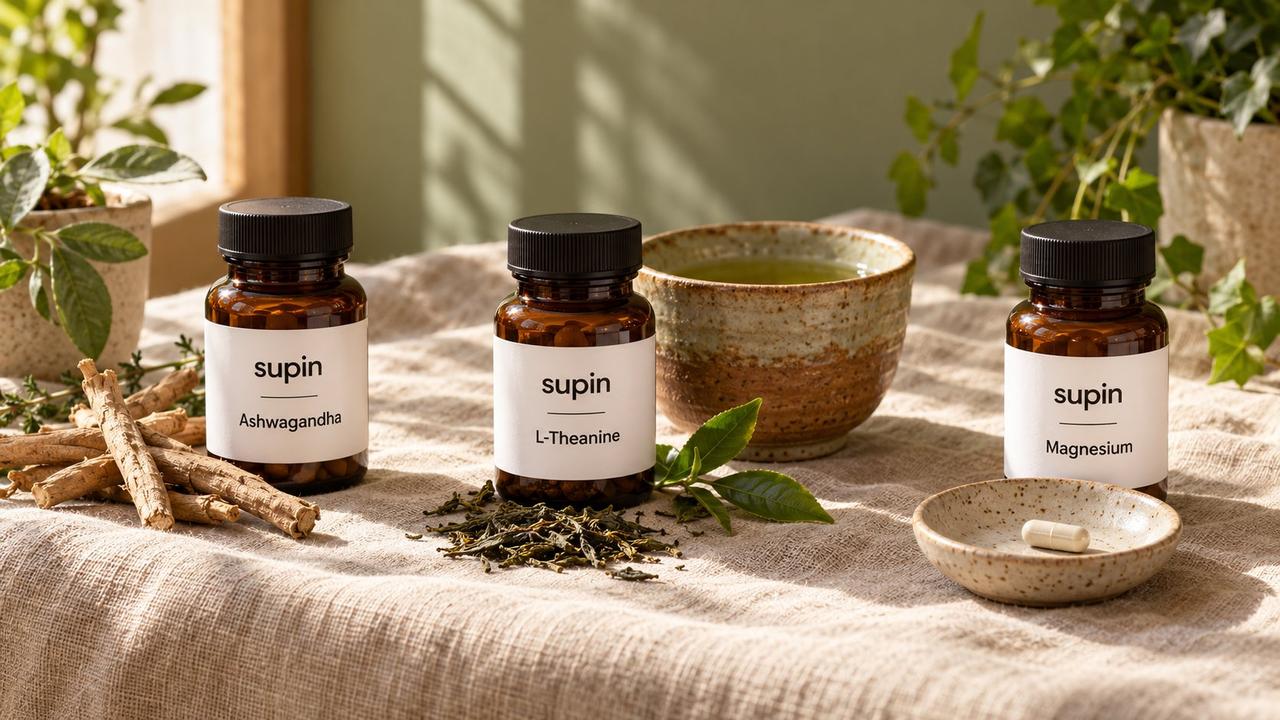
Of the three most popular stress supplements, ashwagandha has the most research: several small trials found it lowered perceived stress and cortisol over 6 to 8 weeks. L-theanine, from tea, has a handful of small studies suggesting 200 to 400 mg a day may help with stress. For magnesium, the evidence is suggestive but poor quality. None is a substitute for treatment if stress or anxiety is affecting your life.
Stress supplements are sold with big promises, and the research behind them is much smaller than the marketing. Below is what the studies actually tested, at what doses, and who should avoid each one, with a side-by-side table.
Which supplement is best for stress?
Ashwagandha has the strongest evidence of the three, but all three are backed by small or short studies. Here's how they compare:
| Ashwagandha | L-theanine | Magnesium | |
|---|---|---|---|
| What it is | Root (sometimes leaf) extract of an Ayurvedic shrub[1] | An amino acid found in green tea[2] | An essential mineral[3] |
| Evidence for stress | Several small trials found lower stress, anxiety and cortisol vs placebo[1] | 9 small trials; 200 to 400 mg a day may reduce stress in stressful situations[2] | Suggestive for anxiety in vulnerable groups, but poor quality[4] |
| Amounts studied | 240 to 1,250 mg a day of extract for 6 to 8 weeks[1] | 200 to 400 mg a day[2] | Adult upper limit from supplements: 350 mg a day[3] |
| Main cautions | Rare liver injury; thyroid; several medicines; pregnancy[1] | Little long-term data[2] | Diarrhea at high doses; kidney disease; some antibiotics[3] |
Does ashwagandha really help with stress?
Small trials suggest it may. A 2021 systematic review found seven studies with 491 adults in India, all with high stress or an anxiety diagnosis, who took ashwagandha or a placebo for 6 to 8 weeks. Overall, ashwagandha significantly reduced stress and anxiety scores, sleeplessness and fatigue, and lowered blood cortisol, a stress hormone[1]. In several of those studies, 500 to 600 mg a day seemed to work better than lower doses[1].
The NIH adds important caveats. Most trials were fairly small and short, and they used different extracts and doses, so it's hard to name a specific product or amount[1]. If you try it, choose a product that names its extract and standardization, and follow the label.
More on the herb itself in our ashwagandha guide.
Is ashwagandha safe?
It appears well tolerated for up to about 3 months, but its long-term safety isn't known. Common side effects are mild: stomach upset, loose stools, nausea and drowsiness[1].
There are rarer, more serious concerns[1]:
- Liver. Ashwagandha has been linked to cases of acute liver injury, some in people with existing liver disease.
- Thyroid. It might affect thyroid function and interact with thyroid hormone medicine.
- Other medicines. It might interact with diabetes and blood pressure medicines, immunosuppressants and sedatives.
- Pregnancy. Some experts advise against it during pregnancy, and Denmark banned ashwagandha in 2023.
- Prostate cancer. It might raise testosterone, so experts say it may not be safe for men with hormone-sensitive prostate cancer.
Does L-theanine work for stress?
The evidence is early but encouraging. A 2020 systematic review of 9 randomized trials concluded that 200 to 400 mg a day of L-theanine may help reduce stress and anxiety in people exposed to stressful conditions. The authors also said longer and larger studies are needed before it can be recommended to reduce stress[2].
One of the better-known trials gave 30 healthy adults 200 mg of L-theanine or a placebo for 4 weeks each. Scores for depression, anxiety and sleep quality improved with L-theanine, and some measures of verbal fluency improved too[5]. It was small, and the tablets were supplied by a company that makes L-theanine[5].
See our L-theanine guide for more.
Does magnesium help with stress and anxiety?
Possibly, but the research is weak. A 2017 systematic review of 18 studies looked at magnesium for anxiety and stress. Studies in mildly anxious people, people with premenstrual symptoms and people with high blood pressure found some positive effects, but magnesium did not help postpartum anxiety, and no study measured stress with a validated scale. The reviewers called the evidence suggestive but of poor quality[4].
If you take magnesium, stay at or under the adult upper limit of 350 mg a day from supplements; this limit doesn't include magnesium in food. High doses can cause diarrhea, nausea and cramping[3]. Forms that dissolve well, such as citrate or chloride, are absorbed more completely than oxide[3]. Our magnesium guide covers forms and timing.
Can I take ashwagandha, L-theanine and magnesium together?
There's little research on combining them, so check with a professional first. The trials above tested each one on its own. Ashwagandha can cause drowsiness and might interact with sedatives[1], so combining several "calming" products, or adding them to sleep or anxiety medicine, is something to clear with your doctor or pharmacist.
Also keep magnesium apart from some antibiotics: tetracycline and quinolone antibiotics should be taken at least 2 hours before or 4 to 6 hours after a magnesium supplement[3].
When should I see a doctor instead?
If stress or anxiety is affecting your sleep, work or relationships, or lasts for weeks, talk to a doctor. Supplements bought in stores can differ from the products tested in studies[6], and none of these has been shown to replace proven treatment. NCCIH advises talking with your health care providers about any supplements you use, and stopping a supplement and contacting them if you get side effects[6].
How Suppin helps
- The Calm focus plan builds a routine for your goal by fixed safety rules, with a reason for every product.
- Tell it if you're pregnant, take thyroid medicine, sedatives or other medications, and products that may not suit you are flagged "Review with a professional".
- Scan a product to see its quality score out of 10, including testing and certifications, before you buy.
- Once you allow AI, ask the assistant how a stress supplement fits with what you already take.
Get Suppin on the App Store to build a calmer routine with safety checks. See the supplement plans.
FAQ
Most trials ran for 6 to 8 weeks[1], so studies don't tell us much about effects in the first days. Its safety has only been studied for up to about 3 months[1].
Studies in a 2020 review used 200 to 400 mg a day[2]. Follow the product label, and remember the research is still small.
No form has been proven best for stress. Citrate, chloride, lactate and aspartate are absorbed more completely than oxide[3], and the adult upper limit from supplements is 350 mg a day[3].
Pregnant women, people with liver disease, people on thyroid medicine and men with hormone-sensitive prostate cancer should avoid it or ask a doctor first. It may also interact with diabetes, blood pressure, immune-suppressing and sedative medicines[1].
People often pair them for sleep. Check the magnesium dose against the 350 mg upper limit[3], and see magnesium and melatonin for more.
Sources
- NIH Office of Dietary Supplements — Ashwagandha: is it helpful for stress, anxiety, or sleep? Fact sheet
- Williams JL, et al. The effects of green tea amino acid L-theanine consumption on the ability to manage stress and anxiety levels: a systematic review. Plant Foods Hum Nutr, 2020
- NIH Office of Dietary Supplements — Magnesium fact sheet
- Boyle NB, Lawton C, Dye L. The effects of magnesium supplementation on subjective anxiety and stress: a systematic review. Nutrients, 2017
- Hidese S, et al. Effects of L-theanine administration on stress-related symptoms and cognitive functions in healthy adults: a randomized controlled trial. Nutrients, 2019
- NCCIH — Using dietary supplements wisely
Educational information, not medical advice. Check with your doctor or pharmacist before starting or changing supplements, especially if you take medication, are pregnant or have a health condition.