Vegan and Vegetarian Supplements: B12, Iron, Omega-3 and Iodine
Which nutrients are harder to get on a plant-based diet, how much you need, and where fortified foods or supplements help: B12, iron, omega-3, iodine and more.
6 min read
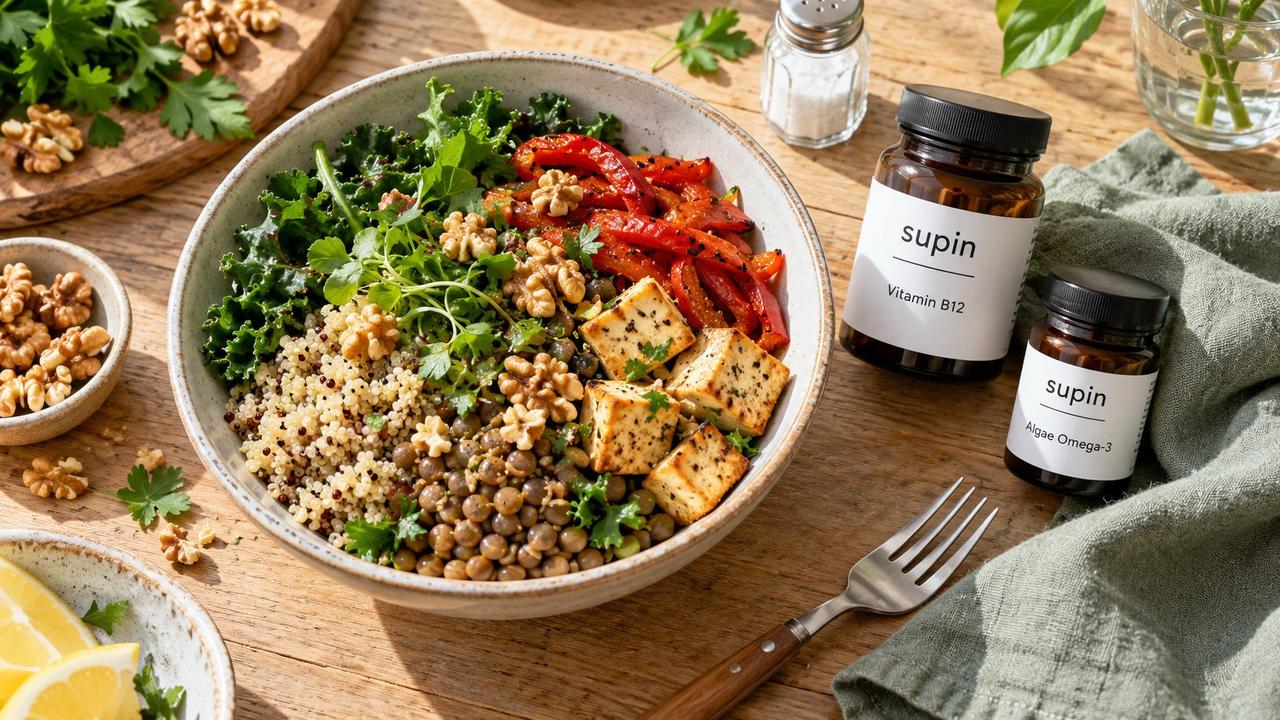
Vitamin B12 is the one nutrient vegans need from fortified foods or a supplement, because it isn't naturally found in plant foods. Iodine, vitamin D, calcium, selenium and the long-chain omega-3s EPA and DHA also need planning, and iron and zinc are absorbed less well from plants. Vegetarians who eat dairy and eggs get some B12 and iodine but are still at higher risk of low B12.
A well-planned plant-based diet can provide almost everything you need. This guide covers the nutrients the NHS and NIH flag, how much adults need, and where fortified foods or supplements fit in.
Which supplements do vegans actually need?
B12 for certain, and possibly vitamin D, iodine, selenium and calcium depending on what you eat. The NHS advises vegans to have fortified foods or consider supplements for the nutrients that are harder to get on a vegan diet: vitamin D, vitamin B12, iodine, selenium and calcium[1]. Without planning, a vegan diet can also fall short on iron[1].
| Nutrient | Why it needs planning | Adult amount (US) | Plant sources and fortified options |
|---|---|---|---|
| Vitamin B12 | Natural food sources are limited to animal foods[2] | 2.4 mcg[2] | Fortified cereals, soya drinks, yeast extract, nutritional yeast[1] |
| Iron | Plant (nonheme) iron is absorbed less well[3] | 8 mg men, 18 mg women 19–50[3] | Pulses, wholemeal bread, fortified cereals, dark green vegetables, nuts, dried fruit[1] |
| Omega-3 (EPA, DHA) | Little ALA is converted to EPA and DHA[4] | ALA: 1.6 g men, 1.1 g women[4] | Linseed, rapeseed oil, chia, hemp seeds, walnuts[1]; algal oil supplements[4] |
| Iodine | Best sources are seafood, eggs and dairy[5] | 150 mcg[5] | Iodine-fortified plant drinks (check the label), iodised salt[6][5] |
| Calcium | Dairy is the main source for most people[7] | 1,000 mg[7] | Calcium-set tofu, fortified drinks, some greens, sesame and tahini[1] |
How much vitamin B12 do vegans need?
The US RDA for adults is 2.4 micrograms a day, rising to 2.6 in pregnancy and 2.8 when breastfeeding[2]. The NHS sets about 1.5 micrograms for adults and notes that, because B12 isn't found naturally in fruit, vegetables or grains, vegans may not get enough[8].
Both vegans and vegetarians who eat some dairy or eggs have a higher risk of B12 deficiency, and fortified foods and B12 supplements can substantially reduce that risk[2]. Breastfed babies of vegan mothers are also at risk[2], so B12 matters especially in pregnancy. There's no US upper limit for B12 because of its low potential for toxicity[2]; the NHS says 2 mg or less a day from supplements is unlikely to cause harm[8]. More in the vitamin B12 guide.
Do vegetarians need iron supplements?
Not automatically, but they need more iron from food than meat-eaters. The NIH says iron requirements are 1.8 times higher for people on vegetarian diets, because heme iron from meat is more bioavailable than nonheme iron from plants[3]. Iron is absorbed at about 5% to 12% from vegetarian diets, compared with 14% to 18% from mixed diets[3].
Two habits help, according to the NHS: eat foods containing vitamin C with iron-rich meals, and avoid tea or coffee during or after main meals[1]. See can I take iron and vitamin C together. Take an iron supplement only if a blood test shows you need one; the upper limit for adults is 45 mg a day[3]. The iron guide compares forms.
Where do vegans get omega-3?
ALA from seeds and oils, and EPA and DHA from algal oil. ALA is the plant omega-3 found in linseed, chia, hemp seeds, walnuts and rapeseed oil[1]. The body can convert ALA into EPA and DHA, but the conversion is very limited, at reported rates below 15%[4].
Fish get their EPA and DHA from microalgae[4], and vegetarian supplements made from algal oil usually provide about 100 to 300 mg of DHA, some with EPA as well. In a small study, DHA from algal oil was as bioavailable as DHA from cooked salmon[4]. There's no official intake for EPA and DHA[4], so follow the label. If you take a blood thinner, ask before starting high-dose omega-3[4]. More in the omega-3 guide.
Do vegans need iodine?
Often yes, from a fortified food or a supplement, because the best sources are animal foods. Seafood, eggs, milk and dairy are among the best sources, and vegans might not get enough[5]. Plant foods contain variable amounts depending on the soil[6].
The NHS suggests that people on a strict vegan diet consider iodine-fortified foods or a supplement, check plant drinks for added iodine, and get advice from a health professional before supplementing[6]. Seaweed is a rich source, but its iodine content varies greatly[5], so it's an unreliable way to hit a target. Don't overdo it: the NHS says 0.5 mg or less a day from supplements is unlikely to cause harm[6], and the US upper limit is 1,100 mcg a day[5].
What about calcium, vitamin D, zinc and selenium?
- Calcium: people who avoid dairy, including vegans, have a higher risk of low calcium intake[7]. Good vegan sources include calcium-set tofu, fortified soya, pea and oat drinks, and greens such as broccoli and cabbage; spinach contains calcium but the body can't absorb all of it[1].
- Vitamin D: people on a vegan diet are among those at risk of low vitamin D[9]. The NHS says everyone should consider a daily supplement in autumn and winter, and vegans should check the label to make sure the vitamin D is not of animal origin[1][10].
- Zinc: phytates in legumes and whole grains bind zinc, so vegetarians and vegans usually have lower zinc intakes. Soaking beans, grains and seeds for several hours before cooking, and eating fermented foods, may help absorption[11].
- Selenium: plant content varies with the soil[12]. Brazil nuts are very high: one ounce (6 to 8 nuts) contains about 544 mcg, above the adult upper limit of 400 mcg a day[12], so a few go a long way.
Should I take a multivitamin or separate supplements?
Either can work; what matters is that B12, vitamin D and iodine are covered in the amounts you need. If you use a multivitamin, check the label for these three, and note that multivitamins often contain only small amounts of calcium[13]. For pregnancy, the NIH notes a recommendation that women on vegetarian or vegan diets ask their health care provider whether they need iron, B12 and other nutrients such as iodine, EPA and DHA[13].
How Suppin helps
- Tell Suppin your diet in setup and your routine is built by fixed safety rules around it, with a reason for every product. The Plant-based essentials plan is designed for vegan and vegetarian diets.
- The Nutrients tab shows your daily totals of B12, iodine, iron and more from your labels against daily values and upper limits.
- Use the scanner to add a product by barcode or label photo and see its quality score and whether it suits you.
- Reminders at your times help a daily B12 become a habit.
Get Suppin on the App Store to cover the plant-based gaps without guesswork.
FAQ
Vitamin B12. Natural sources are limited to animal foods, and fortified foods or supplements substantially reduce the risk of deficiency[2].
Vegetarians who eat dairy and eggs get some B12 but still have a higher risk of deficiency than meat-eaters[2]. Fortified foods or a supplement can help; ask your doctor if you're unsure.
Algal oil supplies DHA, and some products EPA too. In a small study, DHA from algal oil was as bioavailable as DHA from cooked salmon[4].
Many can, by eating iron-rich plant foods with vitamin C and keeping tea and coffee away from meals[1]. Needs are 1.8 times higher than for meat-eaters[3], so get tested if you're worried.
Often, unless they use iodine-fortified foods. The NHS suggests considering fortified foods or a supplement on a strict vegan diet and getting professional advice first[6].
Sources
- NHS — The vegan diet
- NIH Office of Dietary Supplements — Vitamin B12 fact sheet
- NIH Office of Dietary Supplements — Iron fact sheet
- NIH Office of Dietary Supplements — Omega-3 fatty acids fact sheet
- NIH Office of Dietary Supplements — Iodine fact sheet
- NHS — Iodine
- NIH Office of Dietary Supplements — Calcium fact sheet
- NHS — B vitamins and folic acid
- NIH Office of Dietary Supplements — Vitamin D fact sheet
- NHS — Vitamin D
- NIH Office of Dietary Supplements — Zinc fact sheet
- NIH Office of Dietary Supplements — Selenium fact sheet
- NIH Office of Dietary Supplements — Multivitamin/mineral supplements fact sheet
Educational information, not medical advice. Check with your doctor or pharmacist before starting or changing supplements, especially if you take medication, are pregnant or have a health condition.