How to Tell If a Supplement Is High Quality: Testing, Forms and Doses
What makes a supplement high quality: third-party testing seals, well-absorbed forms, sensible doses and the red flags to avoid.
8 min read

A high-quality supplement contains what the label says, in a form your body can use, at a dose close to official recommendations, and is made under good manufacturing practices. The FDA does not approve supplements before they are sold, so look for an independent testing seal, a clear Supplement Facts panel without hidden amounts, well-studied forms and doses that stay under the upper limit.
Price, packaging and words like "clinical strength" tell you very little. Below are the checks that do: what testing seals mean, which nutrient forms are better studied, how to judge a dose, and the red flags worth walking away from.
Does the FDA check supplements before they are sold?
No. Under US law, the FDA does not have the authority to approve dietary supplements before they are marketed, and it generally does not approve their claims or labels before use. Companies are responsible for making sure their products are safe, properly labeled and not adulterated[1].
What the FDA does require is that companies follow current good manufacturing practices (GMPs), which are meant to ensure the identity, purity, strength and composition of a supplement[1]. The NIH Office of Dietary Supplements explains that GMPs can prevent adding the wrong ingredient, or too much or too little of the right one, and reduce the chance of contamination. The FDA inspects manufacturing facilities periodically[2], but that is not the same as testing every bottle.
This is why a few minutes of checking before you buy is worth it.
What does a third-party testing seal actually mean?
A seal means an independent organization tested the product and found it was properly manufactured, contains the ingredients on the label, and does not contain harmful levels of contaminants. The NIH names U.S. Pharmacopeia (USP), NSF International and ConsumerLab.com as organizations that offer this kind of quality testing[2].
What a seal does not mean is just as important: these seals do not guarantee that a product is safe or effective[2]. A tested vitamin can still be the wrong product for you, or interact with a medicine you take.
Be careful with words a company prints about itself. NCCIH notes that a manufacturer's use of terms like "standardized", "verified" or "certified" does not necessarily guarantee product quality or consistency[3]. A named, independent tester is more meaningful than a self-applied badge.
How do I read the Supplement Facts panel for quality?
Start with whether you can see the amount of every active ingredient. For minerals, the panel lists the amount of the mineral itself (the elemental amount), not the weight of the whole compound. The magnesium fact sheet, for example, says the label declares elemental magnesium, not the weight of the magnesium compound[4], and the calcium fact sheet says the same for calcium[5]. So 200 mg of magnesium on the panel means 200 mg of magnesium, whatever form it comes in.
Then look at the %DV column, the form of each nutrient, and any "proprietary blend" where only a total weight is given. Our guide on how to read a supplement label walks through each line.
Which forms of nutrients are better absorbed?
For a few common nutrients, official sources do describe differences between forms, and they are worth checking on the label. For many others, the differences are small or unproven.
| Nutrient | Forms you'll see | What the evidence says |
|---|---|---|
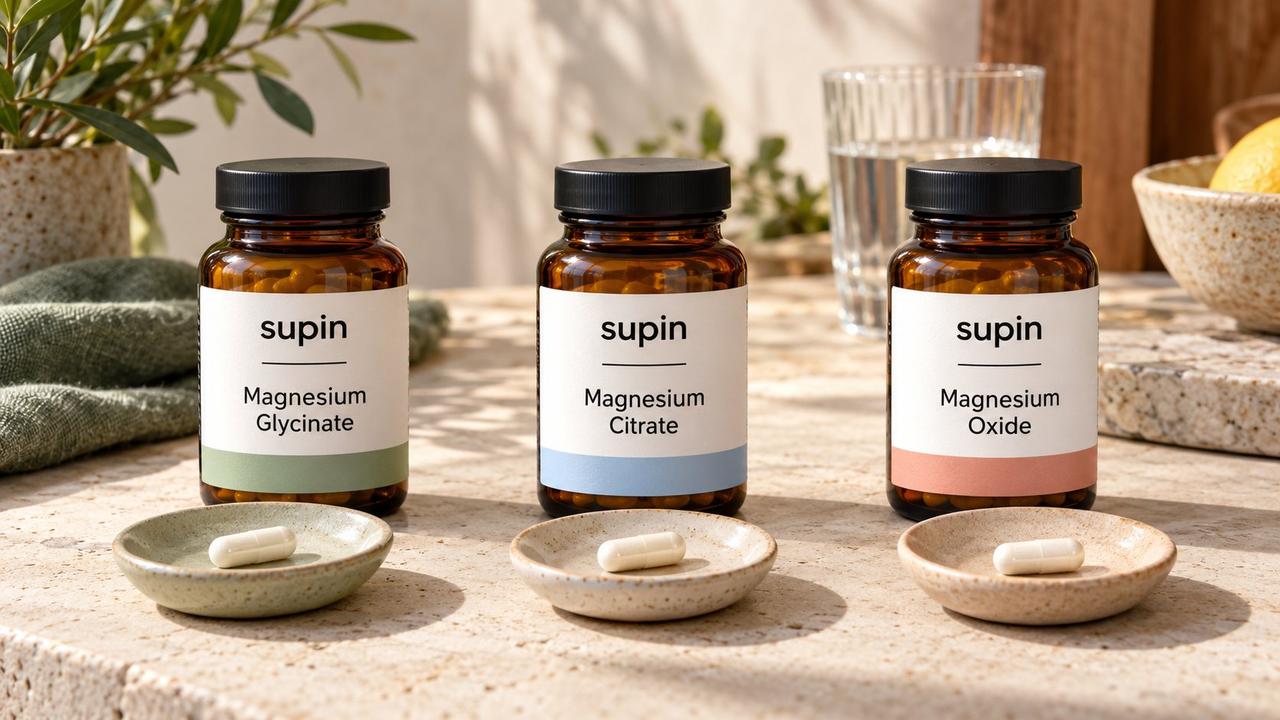
| Magnesium | Oxide, citrate, chloride, aspartate, lactate | Forms that dissolve well in liquid are absorbed more completely. Small studies found aspartate, citrate, lactate and chloride more bioavailable than oxide and sulfate[4]. |
| Calcium | Carbonate, citrate | Carbonate is 40% calcium by weight and is best taken with food. Citrate is 21% calcium and can be taken with or without food. Absorption is highest at 500 mg or less at a time[5]. |
| Vitamin D | D2 (ergocalciferol), D3 (cholecalciferol) | Both are well absorbed, but most evidence shows D3 raises blood levels more and keeps them higher for longer[6]. |
| Folate | Folic acid, food folate | At least 85% of folic acid is estimated to be bioavailable with food, compared with about 50% of folate naturally in food[7]. |
| Zinc | Gluconate, citrate, oxide, sulfate, acetate | In young adults, absorption was about 61% from citrate or gluconate and 50% from oxide[8]. |
| Creatine | Monohydrate, ethyl ester, buffered | Monohydrate is the most studied form. Pricier forms have not been shown to be better[9]. |
A product using a less absorbed form isn't automatically bad. Magnesium oxide, for example, is common and cheap. But if two products cost about the same, the better-studied form is a reasonable tiebreaker. See our guides to magnesium and vitamin D for more on each.
How do I know if the dose is right?
Compare each amount with the daily value and the official upper limit (UL), not with the claims on the front of the bottle. More is not automatically better. The NIH notes that some "high potency" multivitamins contain amounts well above recommended intakes, and in some cases above the UL[10].
A few adult ULs to keep in mind: 40 mg of zinc a day[8], 350 mg of magnesium from supplements and medicines[4], and 2,000 to 2,500 mg of calcium depending on age[5]. Remember that the UL counts everything you take, so two products with the same nutrient add up.
The NIH also suggests choosing a multivitamin designed for your age, sex and life stage. Formulas for older adults, for example, often contain little or no iron and more calcium, vitamin D and vitamin B12[10].
What are the red flags of a low-quality supplement?
- Disease promises. When a supplement label makes a claim about how it affects the body, the law requires a disclaimer that the product is not intended to diagnose, treat, cure or prevent any disease[1]. A product that promises to fix a medical condition is a warning sign.
- Weight loss, sexual enhancement and bodybuilding products. NCCIH warns that some products in these categories have contained prescription drugs or ingredients not listed on the label[3].
- "Natural" as a safety claim. Natural does not always mean safe; kava supplements, for example, can cause liver disease[3].
- Mega-doses. Amounts far above the daily value, especially near or above the UL, with no reason given.
- No independent testing and no way to contact the company.
NCCIH also points out that what's on the label may not be what's in the product, and that the FDA has found prescription drugs in products sold as supplements[3]. Buying from established brands and choosing third-party tested products lowers that risk.
Does a quality supplement mean it will work?
No. Quality tells you the bottle matches the label. Whether the ingredient helps you depends on the research behind it and on your own needs. NCCIH notes that supplements sold in stores or online may differ in important ways from the products tested in studies[3]. A pure, well-made product can still be one you don't need.
How Suppin helps
- The catalog of 17,000+ products gives each one a quality score out of 10, built from label, formulation, testing and certifications, reviews and brand, and value.
- Scan a barcode or take a photo of the label to see a product's score and a verdict on whether it suits you.
- The Nutrients tab adds up your labels and compares daily totals with daily values and upper limits.
- Products with nutrients that may interact aren't added to your routine automatically and are marked "Review with a professional".
Get Suppin on the App Store to check a product's quality before you buy it. Learn more about the supplement scanner and the supplement catalog.
FAQ
Not necessarily. Price doesn't tell you whether a product was independently tested or uses a well-studied form. Creatine monohydrate is a good example: more expensive forms have not been shown to be better[9].
The NIH names USP, NSF International and ConsumerLab.com as organizations that test supplements. Their seals show a product contains what the label says without harmful levels of contaminants, but they don't guarantee it is safe or effective[2].
The company is. The FDA sets manufacturing rules and can enforce the law when unsafe products reach the market, but it does not approve supplements for safety before they are sold[1].
It isn't harmful, but small studies found it is absorbed less completely than citrate, chloride, lactate or aspartate[4]. Check the label for the elemental amount either way.
Both are well absorbed, but most evidence indicates D3 raises and maintains blood levels of vitamin D more than D2[6]. Follow the label dose and stay under the upper limit.
Sources
- FDA — Questions and answers on dietary supplements
- NIH Office of Dietary Supplements — Dietary supplements: what you need to know
- NCCIH — Using dietary supplements wisely
- NIH Office of Dietary Supplements — Magnesium fact sheet
- NIH Office of Dietary Supplements — Calcium fact sheet
- NIH Office of Dietary Supplements — Vitamin D fact sheet
- NIH Office of Dietary Supplements — Folate fact sheet
- NIH Office of Dietary Supplements — Zinc fact sheet
- NIH Office of Dietary Supplements — Dietary supplements for exercise and athletic performance fact sheet
- NIH Office of Dietary Supplements — Multivitamin/mineral supplements fact sheet
Educational information, not medical advice. Check with your doctor or pharmacist before starting or changing supplements, especially if you take medication, are pregnant or have a health condition.