Multivitamin or Single Supplements: Which Makes More Sense for You?
When a multivitamin is enough, when a single supplement fits better, and how to combine them without doubling up on vitamin A, iron or vitamin D.
6 min read
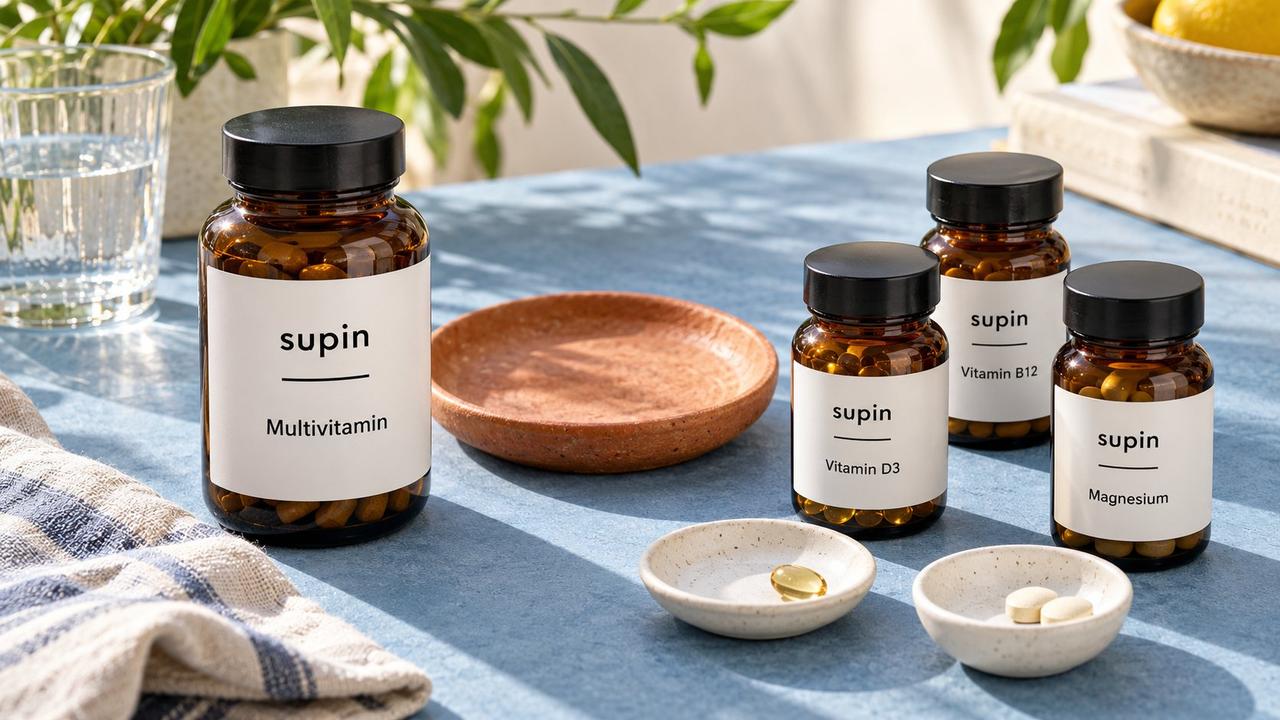
A multivitamin makes sense if you want a broad, low-dose top-up and don't have one specific gap to fill. A single supplement makes more sense when you need a particular nutrient in a set amount, such as vitamin D in autumn and winter, folic acid before pregnancy or vitamin B12 on a vegan diet. Many people end up with one of each, and the thing to watch then is doubling up.
Below: what a multivitamin actually contains, what the research says it does and doesn't do, and a simple way to decide between the two.
What does a multivitamin actually contain?
It depends on the brand, because there is no standard definition. The NIH points out that multivitamin/mineral products have no standard or regulatory definition of which nutrients they must contain or in what amounts, so manufacturers decide the mix[1].
A basic once-a-day multivitamin contains all or most vitamins and minerals, mostly at or below the Daily Values. High-potency products can contain amounts well above the Daily Value, sometimes above the upper limit[1]. Even basic ones often contain only small amounts of calcium, magnesium and potassium[1], so a multivitamin is rarely a full source of those. The only way to know what you are getting is the Supplement Facts panel; see how to read a supplement label.
Does a multivitamin improve your health?
It raises your nutrient intake, but there's little evidence it prevents disease in people who are already well nourished. NCCIH sums up the research: most studies show that taking multivitamins doesn't result in living longer, slowing cognitive decline, or lowering the chance of cancer, heart disease or diabetes[2]. An evidence review for the U.S. Preventive Services Task Force found little or no benefit from vitamin and mineral supplements for preventing cancer, cardiovascular disease and death, apart from a possible small benefit against cancer from multivitamins, and the Task Force concluded the evidence was insufficient to weigh benefits against harms[1].
What a multivitamin does reliably is increase intakes and help people reach recommended amounts when their diet falls short[1]. NCCIH adds that taking a multivitamin is unlikely to pose health risks[2]. And the NHS starting point still applies: most people should get the nutrients they need from a varied, balanced diet, although some people need extra[3].
When does a single supplement make more sense?
When official advice names one nutrient and one amount. A few examples:
- Vitamin D: the NHS says everyone should consider a daily 10 microgram supplement in autumn and winter, and some groups all year[4]. Many multivitamins contain vitamin D, but check the amount. More in the vitamin D guide.
- Folic acid: the NHS recommends 400 micrograms a day if you are pregnant, trying for a baby or could get pregnant, until 12 weeks of pregnancy[5].
- Vitamin B12 on a plant-based diet: vegans and vegetarians are at higher risk of low B12, and fortified foods and B12 supplements can substantially reduce that risk[6].
- Iron: when a doctor has found low iron. Iron needs differ a lot by age and sex, from 8 mg a day for men to 18 mg for women aged 19 to 50[7], so a one-size multivitamin may not match.
Multivitamin vs single supplements: side by side
| Multivitamin | Single supplements | |
|---|---|---|
| What you get | Many nutrients, usually near the Daily Value; often little calcium, magnesium or potassium[1] | One nutrient (or a small group) in a chosen amount |
| Best for | A general top-up when your diet is limited or irregular | A specific, named need: vitamin D in winter, folic acid before pregnancy, B12 on a vegan diet |
| Pills per day | Usually one | One per nutrient, which adds up |
| Watch out for | Vitamin K if you take warfarin[1]; iron you may not need | Overlap with a multivitamin or fortified foods |
Can I take a multivitamin and single supplements together?
Usually yes, as long as you add up the totals. Overlap is the common problem. In one analysis, 10% to 15% of multivitamin users had excessive intakes of vitamin A, iron and zinc[1]. Upper limits (ULs) are the maximum daily intake unlikely to cause harm, and above them the risk of side effects increases[1].
The nutrients most worth checking when you stack products:
- Vitamin A: many multivitamins contain it, and fish liver oils are high in it. The NHS advises keeping food plus supplements to no more than 1.5 mg (1,500 µg) a day[8].
- Vitamin D: the NHS says not to take more than 100 micrograms (4,000 IU) a day unless a doctor advises otherwise[4].
- Calcium: absorption is highest with doses of 500 mg or less at a time[9], so a separate calcium tablet on top of food and a multivitamin is often split. See can I take vitamin D and calcium together.
- Iron and zinc: both appear in most multivitamins and in many single products.
How do I choose a multivitamin for my age and sex?
Pick one designed for your life stage. The NIH suggests choosing a product made for your age, sex and life stage, such as pregnancy. Multivitamins for adults over 50 often contain little or no iron and more calcium, vitamin D and vitamin B12 than those for younger adults, and prenatal products generally contain no vitamin A as retinol[1]. That matches the change in needs: the iron RDA for women falls from 18 mg to 8 mg a day after 50[7].
Then compare the label against what you already take. If your multivitamin already gives you 10 micrograms of vitamin D, a separate vitamin D tablet may be unnecessary. Our multivitamin guide covers forms and timing.
Who should check with a doctor first?
Talk to your doctor or pharmacist before choosing if you take a blood thinner such as warfarin, because vitamin K in multivitamins can affect it[1]; if you are pregnant or planning a pregnancy, since vitamin A as retinol can increase the risk of birth defects at high intakes[1]; or if you have a health condition or take regular medication.
How Suppin helps
- The Nutrients tab adds up your daily totals from every label in your routine and shows them against daily values and upper limits, so overlaps between a multivitamin and single products are visible.
- The stack score rates your routine as a whole.
- Scan a barcode or a label photo to add a product, and the catalog of 17,000+ products shows a quality score out of 10 and whether it suits you.
- Your routine is built by fixed safety rules from your goals, diet and health answers, with a reason for every product, and you choose the routine size.
Get Suppin on the App Store to see what your multivitamin and single supplements add up to.
FAQ
For a general top-up, it can be. But multivitamins often contain little calcium, magnesium or potassium[1], and they may not match a specific need such as the NHS winter vitamin D advice[4].
Not automatically. Single supplements are better when you need one nutrient in a set amount; a multivitamin is simpler when you want broad coverage at around the Daily Value.
Add up both labels first. The NHS says 10 micrograms a day is enough for most people and not to exceed 100 micrograms a day unless your doctor advises it[4].
Most research shows they don't help people live longer or lower the chance of cancer, heart disease or diabetes[2].
Usually not unless a doctor advises it. The iron RDA falls to 8 mg after 50[7], and 50+ formulas often contain little or no iron[1].
Sources
- NIH Office of Dietary Supplements — Multivitamin/mineral supplements fact sheet
- NCCIH — Using Dietary Supplements Wisely
- NHS — Vitamins and minerals
- NHS — Vitamin D
- NHS — B vitamins and folic acid
- NIH Office of Dietary Supplements — Vitamin B12 fact sheet
- NIH Office of Dietary Supplements — Iron fact sheet
- NHS — Vitamin A
- NIH Office of Dietary Supplements — Calcium fact sheet
Educational information, not medical advice. Check with your doctor or pharmacist before starting or changing supplements, especially if you take medication, are pregnant or have a health condition.